
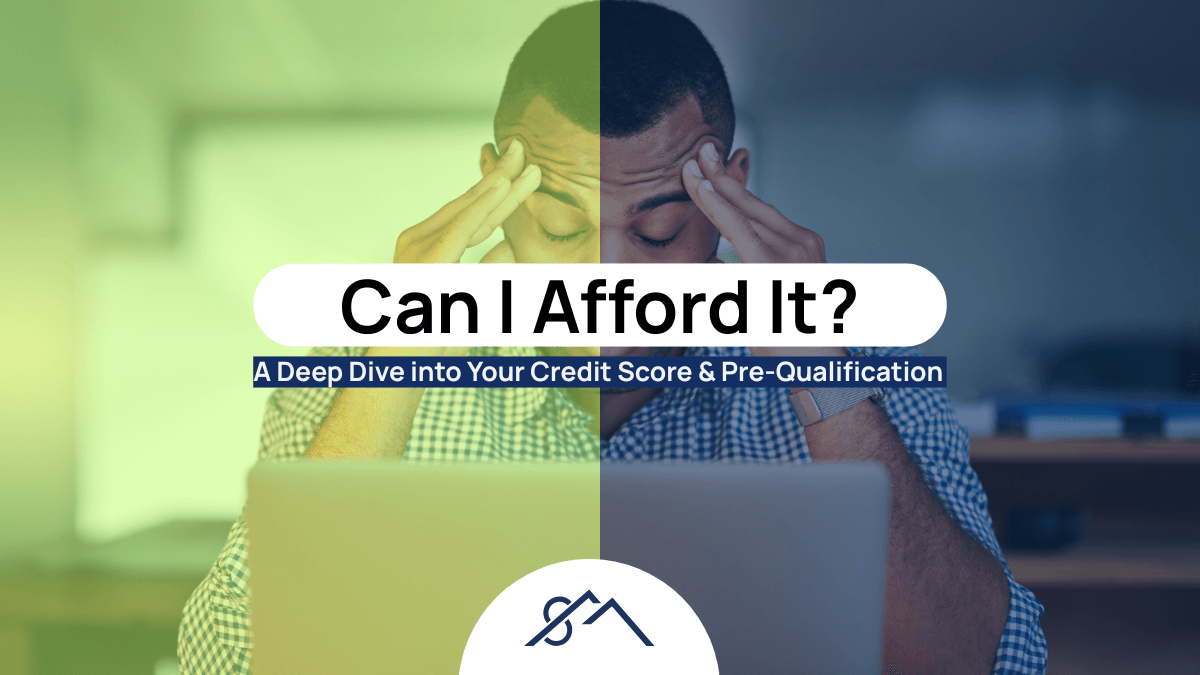
It’s the single biggest question that stands between you and your dream home: ‘Can I really afford it?’ This guide is designed to replace that anxiety with a clear, confident action plan. We’ll walk you through how to get pre-qualified for a home loan, giving you the certainty you need to start your property journey.
In our Ultimate 10-Step Guide to Buying a Home in South Africa, we identified the financial health check as the critical first step. Now, we’re going to pull back the curtain and do a deep dive. This is where we replace guesswork with certainty and anxiety with a clear, actionable plan.
Forget the vague numbers and confusing bank jargon. By the end of this guide, you will understand exactly where you stand financially and hold the “VIP pass” that transforms you from a window shopper into a serious, high-priority buyer.
Part 1: Your Credit Score – Your Financial Report Card
Before a bank decides to lend you a life-changing amount of money, they want to see your “report card.” In the financial world, this is your credit score. It’s a three-digit number that tells the story of how you’ve managed debt in the past. It’s not a judgment of you as a person; it’s simply a risk assessment for the lender.
A great credit score is your golden ticket. It doesn’t just get your home loan approved; it unlocks better interest rates, which can save you tens of thousands of Rands over the life of your loan.
What is a “Good” Credit Score?
In South Africa, credit scores generally range from 300 to 850. While every lender has slightly different criteria, here’s a good rule of thumb:
- Below 600: This is considered poor to fair. You may struggle to get a home loan approved.
- 600-649: This is good. You are likely to be approved, but might not get the best interest rates.
- 650+: This is excellent. You are seen as a low-risk borrower and are in a very strong position to negotiate the best possible interest rates.
How to Boost Your Score: 3 Simple Steps
Improving your credit score is a marathon, not a sprint, but you can make a significant impact by focusing on these three things:
- Pay Everything On Time: This is the single most important factor. Your payment history on all your accounts—from car payments to clothing accounts—is the biggest contributor to your score.
- Manage Your Credit Card Balances: Try to keep your credit card balances below 30% of your total limit. A maxed-out credit card is a red flag for lenders.
- Don’t Apply for Too Much New Credit: Every time you apply for new credit, a “hard inquiry” is logged on your report. Too many of these in a short period can temporarily lower your score.
Your Action: You are legally entitled to one free credit report per year from each of the major bureaus. You can also monitor your score for free using a reputable service like ClearScore. Check your report, dispute any errors, and start implementing these steps today.
Part 2: The Affordability Puzzle – Cracking the Bank’s Code
Once the bank sees you have a good track record (your credit score), they need to figure out how much you can comfortably afford to repay each month. This is your “affordability.”
As a general guideline, banks cap a home loan repayment at around 30% of your gross monthly income (your salary before tax). From this amount, they subtract all your existing monthly debt payments to arrive at your true affordability. This is known as your Debt-to-Income ratio, and it’s a critical calculation.
Let’s break it down with a real-world example:
- Your Gross Monthly Salary: R35,000
- The Bank’s 30% Calculation: R35,000 x 0.30 = R10,500. This is the absolute maximum the bank believes you can spend on all your monthly debt combined.
- Your Existing Monthly Debts:
- Car Payment: R3,000
- Credit Card Repayment: R1,000
- Personal Loan: R1,500
- Total Monthly Debt: R5,500
- Your Real Affordability: The bank takes their maximum (R10,500) and subtracts your existing debt (R5,500).
- R10,500 – R5,500 = R5,000 per month.
It might seem shocking that someone earning R35,000 is left with only R5,000 for a bond. This is a crucial lesson: your existing debt is the single biggest factor limiting your home loan affordability. The bank sees that R5,500 of your available R10,500 is already spoken for, leaving only the remainder for a potential home loan.
This calculation isn’t a dead end; it’s a roadmap. It shows that the fastest way to increase your home loan affordability is to reduce or clear your existing short-term debt before you apply.
Part 3: Pre-Qualification – Your VIP Pass to the Property Market
Now that you understand the numbers, it’s time to make it official. Getting pre-qualified through a bond originator is the final, crucial piece of this puzzle. It’s a formal certificate that confirms your credit readiness and affordability, based on the calculations we just did.
This certificate is the single most powerful tool in your arsenal. It:
- Gives You a Rock-Solid Budget: No more guessing or wishful thinking.
- Makes You a “Serious Buyer”: It shows sellers and agents that you are a low-risk, high-priority client.
- Boosts Your Negotiating Power: An offer backed by a pre-qualification certificate is infinitely stronger.
A Crucial Caution: The Financial Freeze
Once you have your pre-qualification, it is absolutely critical that you do not take on any new debt until your home loan is fully registered. The banks will do a final credit check before registration, and any new debt can jeopardise the final approval of your home loan.
Ready to Know Your Numbers?
Navigating your finances is the first and most important step in the home-buying journey. It’s the foundation upon which your entire property dream is built. You don’t have to do it alone.
If you’re ready to move from uncertainty to clarity, the next logical step is to get pre-qualified.
As your property practitioner, I can connect you directly with my network of trusted, high-performing bond originators. They will provide you with a comprehensive pre-qualification, at no cost to you, and with absolutely no obligation.
Let’s work together
To give you the financial confidence you need to start your search for the perfect home.